

What Does the Cloth Remember?
Material Memory, Echoes, and How to Build a World from a Single Thread
Standing in front of a 17th century silk nightgown in the V&A’s collection its maker is simply labelled as “unknown”. There is one question I keep returning to…
What does the cloth know that we don’t?
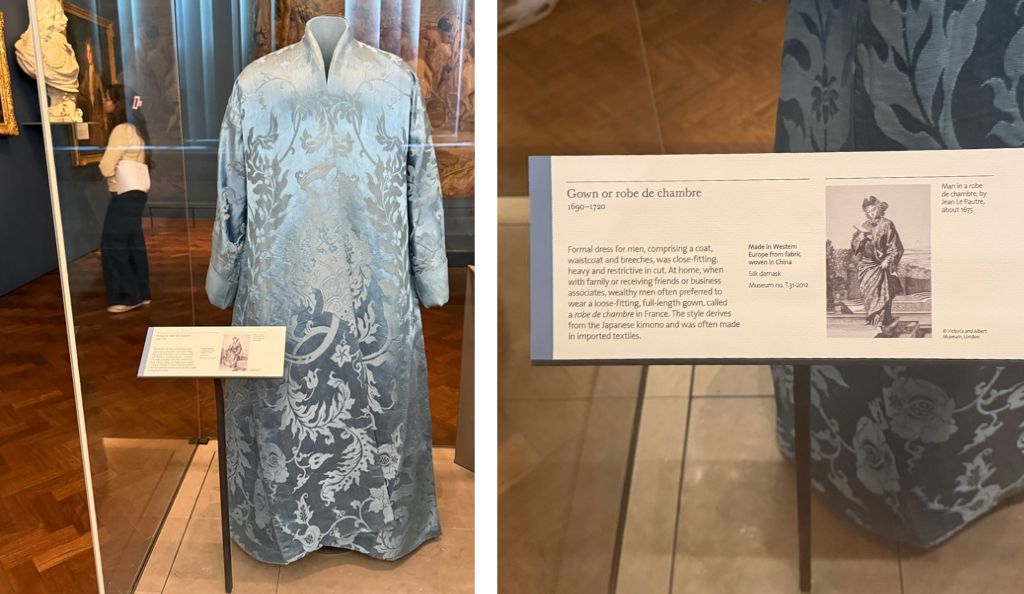
V&A Collection - 17th Century Night Gown
Its label gives a rough origin, a date, a material, a description of style and context but a crucial piece remains missing… Whose hands created this? Whose mind imagined, measured, cut, and adjusted it? The label tells us only about the shoulders it may have sat on; wealthy European men relaxing at home, a social indicator of status during a time of global trade and colonisation. Nothing is mentioned about the person who made it.
It begs the question, “who’s story gets to be told?” The maker’s or the wearer’s? Whose world do we see when we preserve cloth? And how do we unravel its memories, and listen to its echoes, in today’s world?
These are the questions I have been sitting with as I develop my project for PORTALS: Worlds Made to Explore — a public showcase taking place at V&A South Kensington as part of the Performance Festival 2026, on April 25th and 26th. The exhibition presents immersive digital environments created by practitioners working across spatial storytelling and immersive design. My project, “Silk Routes - A Thread of Passage”, examines a17th century night gown through worldbuilding and poetry as a means of storytelling.
Echoes as a Conceptual Framework - Material Memory and Thread as Transmission
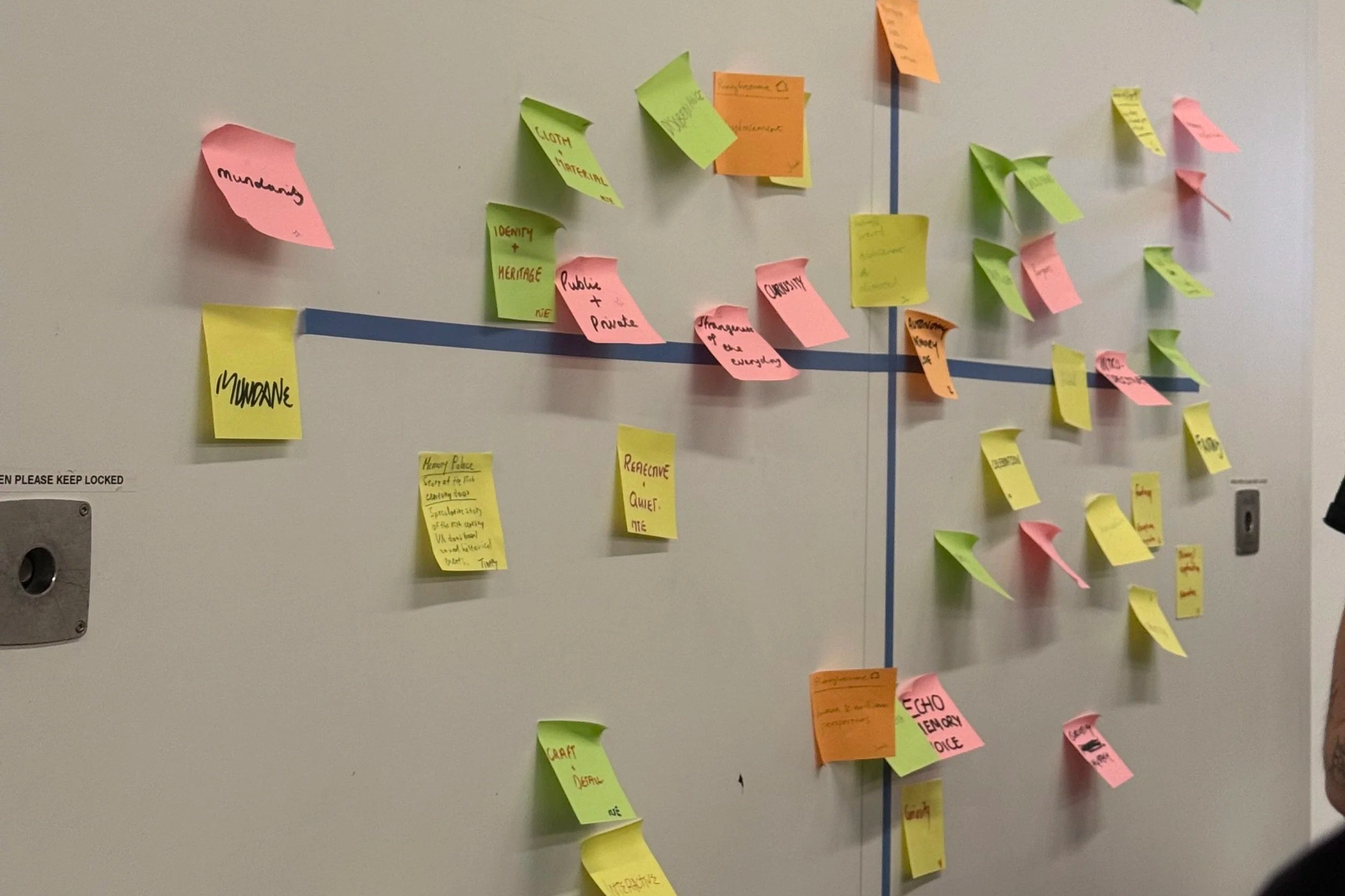
This year’s V&A Performance Festival takes Echoes as its conceptual framework.
The theme asks us to consider how ideas, forms, gestures, and stories resonate and transform across space and time. How the past keeps arriving in the present. How things repeat without ever quite repeating in the same way.
An echo occurs when a sound persists beyond its origin, it can be repeated, faded or transformed, arriving somewhere different from where it started. To me, material is one of the richest means through which we can examine this phenomenon. Cloth itself is one of the oldest echo-making technologies we have. Patterns and prints inspired by the natural world. Techniques passed from generation to generation. Fabric can act as a record of history, not a natural occurrence, but an act of human hands. Evidence of lives lived, still present in our world today and a portal into theirs.
Look closely at the threads binding a garment together and you begin to see them as transmission, a necessity that brings everything into form. . How do we examine the patterns behind the cloth? The stories, the lives, the hands that brought this now museum object into existence? This is the core idea that runs through my project
Worldbuilding as Cultural Excavation
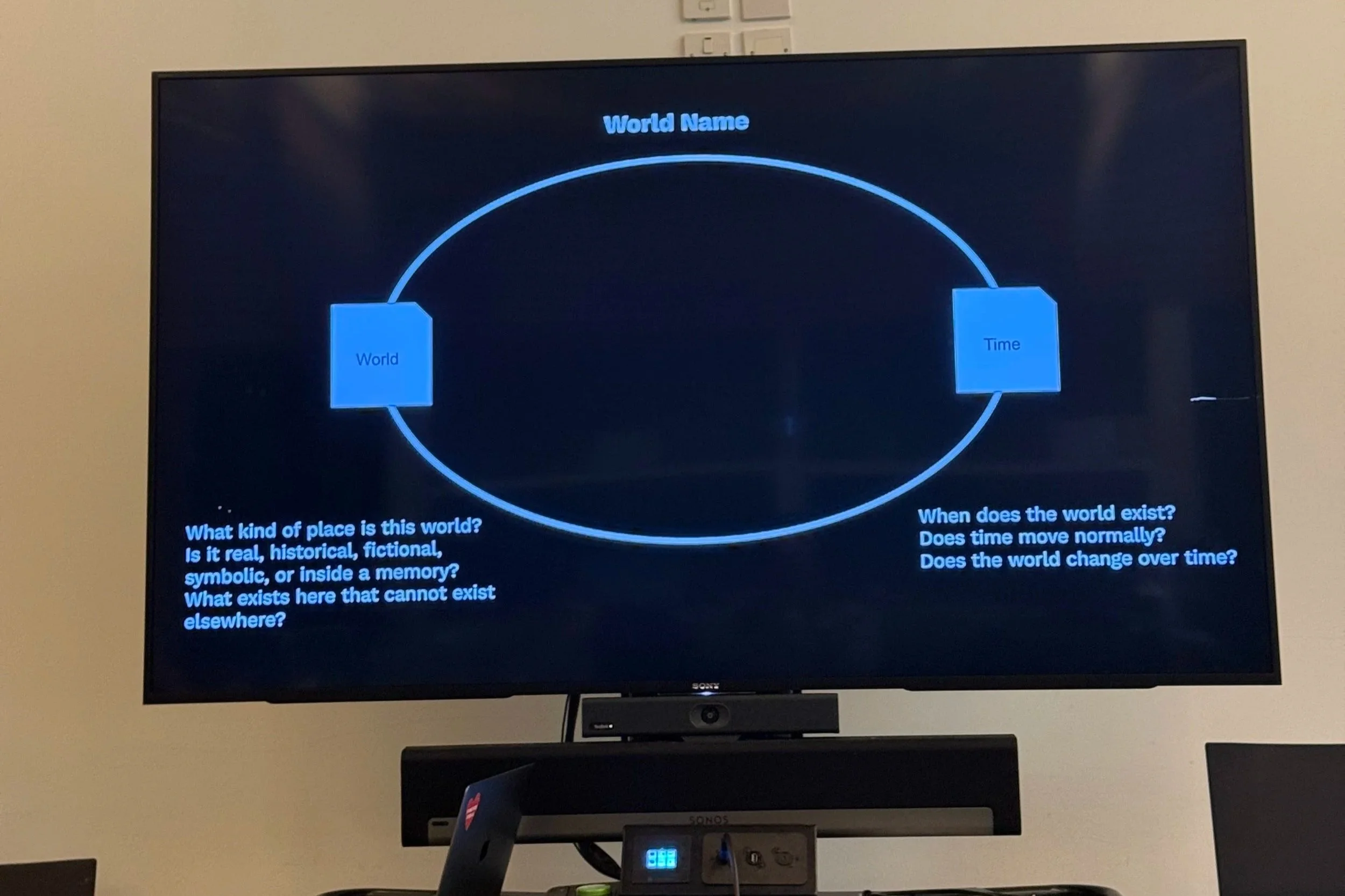
What is a world, exactly?
Being asked to build a world as a medium for storytelling felt uncomfortable at first. My mind turned immediately to logistics.
A quick google search will you that there doesnt seem to be one unanimous definition. Oxford Languages describes it as “the earth, together with all of its countries and peoples.” Merriam-Webster offers “the earthly state of human existence” or “the system of created things.”
I felt a great sense of responsibility with the brief. To build a world made me think of the genesis of creation itself, all the cosmological arguments, of the question of who creates and why. Who made this world we exist in? What is the purpose of our existence? And there, the thread came back into focus: the unknown creator of a 17th century gown, encased in glass, their existence reduced to a single word on a label. Museums are full of these types of “unknown” objects. Carefully crafted works of art whose beauty is inseparable from the systems that produced them - the colonial trade routes, the exploitation of enslaved people, the extraction of resources and the erasure of cultural origins.
Worldbuilding granted me the power to tell the story I wanted to tell. In this immersive digital space, I was not bound by worldly rules. Objects can be enormous, floating, at an unfamiliar scale. Technology gives you the opportunity to create meaning in space with fewer constraints than a glass case ever could. What mattered most to me was bringing the cloth itself to life, giving the digital space the chance to let the object breathe beyond its label.
What I love about this concept is that everyone has the experience of existing in this world called Earth (and perhaps their own worlds too). However, my work becomes an intentional space for us all to examine the same question together: what does the cloth remember?
The most interesting boundary being blurred by immersive practice is not between a screen and a body. It is between what an institution decides to say about an object, and what the object itself carries. Between the authorised story and the echo underneath it. Between the label and the memory.
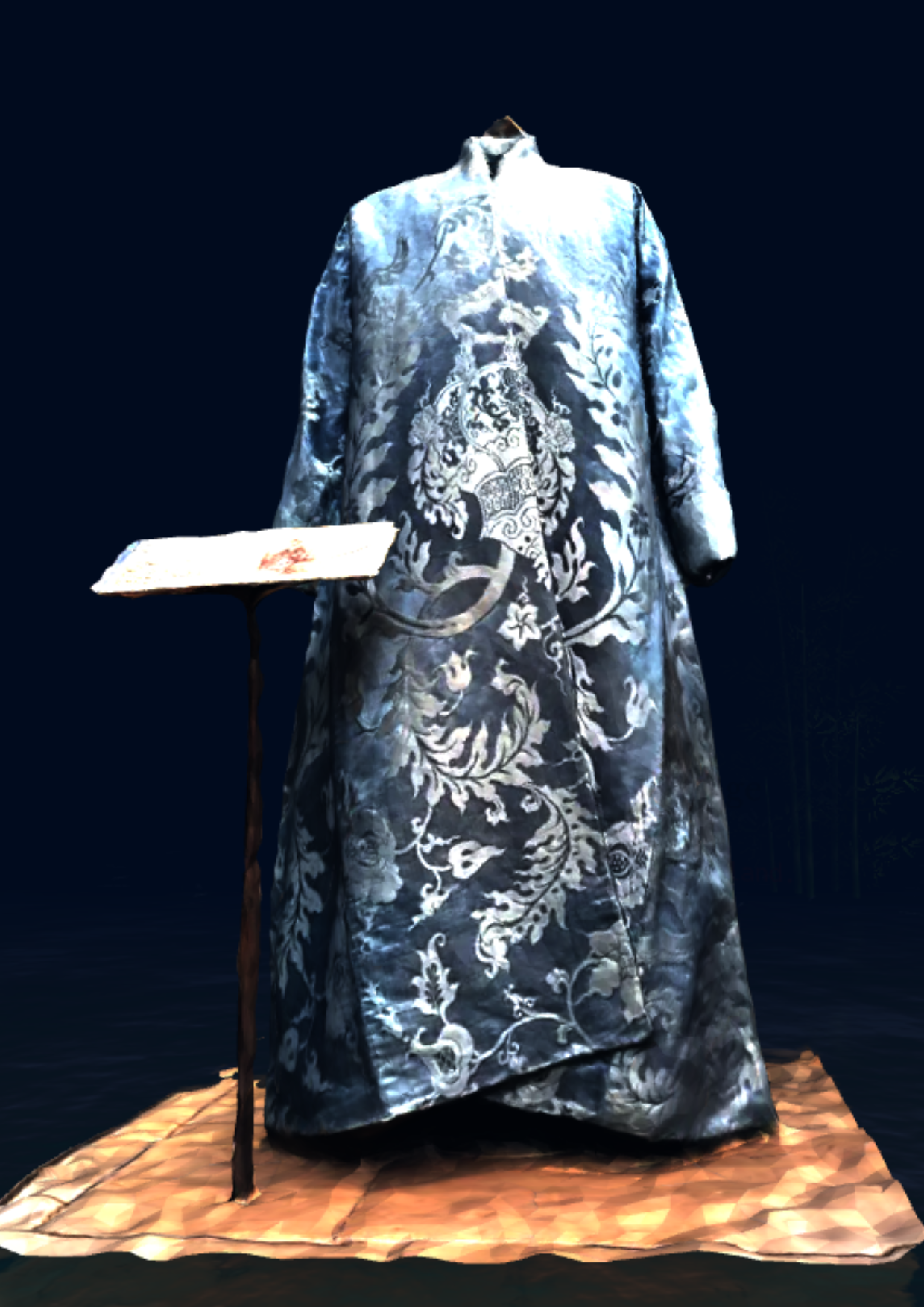
Come and explore the hidden histories behind the cloth.
I will be sharing more about “Silk Routes: A Thread of Passage” as the exhibition approaches. But for now, I will leave you with the same question I started with.
What does the cloth remember that we don’t?
— Marie
Marie is the founder of MJE Studio, an interdisciplinary creative practice rooted in textiles, heritage research, and material storytelling. She is a participant in the V&A Portals Programme 2026.
